
Help with
dyslexia, cognitive and auditory processing disorders, autism, motor development delay, degenerative diseases such as dementia or Alzheimer's, ADHD or excessive anxiety in general

NeuraSonic® Listening Therapy is based on the work of Dr. Alfred A. Tomatis, a French physician and otolaryngology specialist who spent the past 50 years of his life developing a certain approach which assists and accelerates the development of listening skills, language, and communication. Neurasonic® is a system of sound stimulation and audio-vocal training inspired by Alfred Tomatis legacy, aiming at improving functioning of the ear as it relates to listening, understanding, and communication.
NeuraSonic® helps when...
the goal is to re-educate the ear in order to enhance such areas as:
Sensory Integration
Attention, Focus, Memory
Auditory Processing
Motor Control, Posture
Expressive and Receptive Language
Social Interaction
Stress and Anxiety
Learning Skills
Confidence and Self Esteem
Organizational Skills

NeuraSonic® aims to give individuals the opportunity to develop their full listening function by retraining the ear on how to listen. This approach can be applied to a variety of areas relating to learning and communication, personal and behavioral development, body work, degenerative disorders, extreme anxiety among others.
Learning & Communication Difficulties
Dyslexia
Attention Disorders
Learning Difficulties
Auditory Processing Disorders
Sensory Integration Disorders
Communication Disorders
Language Disorders
Autism Spectrum Disorders
Personal & Behavioral Development
Personal Development & Well being
Stress
Preparation for childbirth
Emotional Disorders
To determine if you or your child is a candidate, please contact us at [email protected] to schedule a phone call or an appointment
Definition
If you look up the word dyslexia in the dictionary, you’ll find that it is derived from the Greek word “dys” (meaning poor or inadequate) plus “lexis” (words or language). Perhaps you know someone with dyslexia. If so, you probably know one of the common problems they have is transposing letters or numbers. These problems can occur in listening, writing, reading, spelling or handwriting. In other words, dyslexic people process language poorly, but that doesn't mean they aren't intelligent. In many cases, individuals diagnosed with dyslexia have a better sense of spatial relationships or better use of their right hemisphere of the brain.
Analyzing the Sounds
How it affects each person varies significantly. Dyslexia somehow manifests itself differently from individual to individual. However, the only common factor seems to be that they read at levels significantly lower than typical people of a similar age and intelligence.
Reading, whether silent or aloud, has to do with processing sound. Sound is a very complex mixture of frequencies with varying intensities. Analyzing it so quickly and accurately is exceedingly difficult. Even the most sophisticated computers still have trouble analyzing sound fully. That is why many voice recognition systems are still imperfect. We analyze sounds in the inner ear, more specifically in the cochlea. If the cochlea is not analyzing sounds accurately, dyslexia can occur.
Each sound has a base frequency and some higher frequencies (or higher harmonics). When some sounds have nearly the same frequency, differing only in the higher harmonics, a person with dyslexia might misinterpret them. For example a “B” and “P” have similar base frequencies. Likewise, a “T” and a “D” do also. When someone says to them “Bob”, they are not sure what was said. It could be “Bob” or “Bop” or “Pop.” By the time they have figured out what was said, the speaker is already into his next sentence or maybe more. Consequently, the person with dyslexia tends to process language at a slower rate. They just have an auditory processing problem.
To address this problem, NeuraSonic listening therapy retrains your ears, to hear and process these differences much better. We do this by having you listen to gated music, using specific high frequency bands. This makes that gradually you will be able to distinguish between the higher harmonics. So, you will no longer be guessing whether some one said Bob or Pop! Once you can hear the sounds clearly, you'll also start improving your spelling.

Ear / Eye Coordination
Reading is a complex act that requires the ears and eyes to work together synchronously. As the eyes see a letter, the ears identify the corresponding sound even when reading silently. Then, the vestibule leads the eye from letter to letter and the cochlea translates each letter into a sound. Ideally, both operations should happen almost simultaneously. The trouble starts when the delay is too long. So, if the vestibule and cochlea are not in sync, the eyes and ears are not in sync either.
To make things more complicated, each sound lasts a specific time. The ear constantly has to adjust to these rapid changes. When it does not, the eyes and ears are no longer in synch. The right sound is not put together with the right letter. Without the sound, the letter remains dead. The meaning cannot emerge. The dyslexic is left second-guessing, hoping for a miracle taking the chance to utter finally a sound that might fit the letter of the alphabet dancing on the page.
To impact the functioning of the vestibule, we'll have you listen to low frequency gated music. The effects are usually very rapid and very visible. People quickly improve their motor skills and posture. They often start to do better in sports, improving their self-esteem. Then, gradually, you'll start to read with more pleasure, and further improve your spelling.
Right Ear Dominant
To the surprise of many, we each have a dominant ear. Some are right-ear dominant. Others are left-ear dominant. The advantage in being right-ear dominant is that the right ear processes the incoming auditory information faster than the left ear. Therefore, people who are right ear dominant learn and think faster, and speak better.
People who are right ear dominant are more likely to pay attention because they can process information faster. The right ear has that advantage because it sends the information directly to the left brain, which specializes in processing language. When a person is left-ear dominant, the information is perceived by the right brain. That part of the brain has no language center and, therefore, the information has to be rerouted to the left brain via the Corpus Callosum. Because that’s a longer pathway, the information is delayed. Left-ear-dominant people thus have to play catch-up all the time. Not only is the information late, it is also incomplete. In the transfer from the right brain to the left brain, some of the higher frequencies are lost. As we have seen before, these are the frequencies that are key to distinguish similar sounds (like a B and a P). Left-ear-dominant people thus not only have to play catch-up, they also have to play with an incomplete deck.
NeuraSonic® listening therapy helps people with dyslexia achieve better right-ear dominance. Towards the end of the program, we'll gradually shift the sounds from both ears to the right ear. You'll also do some reading exercises through a microphone coupled with our electronic equipment. We'll filter your voice and return it exclusively to your right ear. In this way, you will be able to easily check the quality of your voice and language. You will be more in control of what you read or say. This is very important, since self-listening skills are often poor in dyslexic people. Over time, you'll become right ear dominant, and read , learn and speak better.
Auditory processing and the NeuraSonic listening therapy
Although a child’s ability to hear may be diagnosed as normal, they can still be suffering from an auditory processing disorder. This is because a child can hear in the sense that there is not damage to the ear’s ability to receive and perceive sounds. The problems lies in that the child cannot fully process the information that is heard in the same way as others because the ears and brain are not communicating properly, which provokes many of their learning and communication difficulties. Human beings hear when energy that we recognize as sound travels through the ear and is changed into electrical information that can be interpreted by the brain. An auditory processing disorder indicates that something is somehow affecting the processing or interpretation of the sounds received by the brain. Again, children with an auditory processing disorder typically have normal hearing and intelligence. Nor does their difficulty lie in developmental intelligence. Rather, the difficulty lies in paying attention to and remembering information presented verbally, carrying out multi-step directions, confusing syllable sequences, poor vocabulary development, difficulty with reading, comprehension, spelling, and overall poor listening skills and therefore, low academic performance. At a fundamental level, these language and communication disorders can be linked to an under-developed ear.
What are the Causes?
An auditory processing disorder is a physical hearing impairment. However, as stated it is not one that shows up as a hearing loss on routine screenings or an audiogram. Instead, it affects the neurological system beyond the ear, which identifies and separates meaningful messages from non-essential background noise and sends that information to the intellectual centers of the brain. A constant interference in the processing of information can be hereditary in families, a result of a difficult pregnancy or birth, or the disorder can be acquired from a head injury or a severe illness during the child’s first years. Frequently, the exact cause is unable to be identified.
What Are the Specific Signs and Symptoms?
Of course, the following exemplary symptoms of CAPD can range from mild to severe and can take many different forms, depending on the child. If you think there may be a problem with how your child processes information or what he/she is able to hear and pick up, you can ask yourself these questions, but ultimately you will need to have him/her diagnosed by a qualified professional:
Is he/she easily distracted or unusually bothered by loud or sudden noises?
Do noisy environments upset him/her?
Does he/she have difficulty following directions, whether simple or complicated ones?
Does he/she have reading, spelling, writing, or other speech-language difficulties?
Is abstract information difficult for him/her to comprehend?
Does he/she have difficulty following conversations?
These, as well as other behaviors may be signs of a central auditory processing disorder. However, it is often-misunderstood or misdiagnosed because many of these symptoms may also be indicative of other conditions such as learning disabilities, attention deficit hyperactivity disorder (ADHD), and other related developmental difficulties.
How Does Auditory Processing Relate to My Child?
Auditory processing provides the foundation for learning language and for learning language-based academic skills such as reading, spelling, and writing. When auditory processing abilities are not well developed, an individual is at risk for language and learning disabilities. Children with auditory processing disorders may have difficulty following multi-step directions. They may mishear and therefore misunderstand what is said to them. For example, a question such as “How old are you?” may be heard as “How are you?” These children may say “what?” or “huh?” frequently. They often need directions repeated. Their responses in conversation may be delayed and at times absent. They may not understand jokes and may have trouble finding the words to express themselves verbally or on paper.

In more severe cases, speech and language may be delayed, as these children are unable to quickly discriminate and attach meaning to words spoken to them. Children who do not process sounds properly do not respond to verbal cues. They can mispronounce words because they have misheard them. Their social skills can be affected, as they are not processing auditory information at a sufficient speed to respond promptly in a two-way verbal exchange. Over time, this lack of verbalization deprives the ear of the stimulation it needs for continued fine-tuning – children learn to focus on the human voice above all other sounds by hearing their own voice repeatedly. The human voice may become too complex or difficult for them to process, so they continue to tune it out. After a while, they become disconnected from the outer word.
Children with auditory processing difficulties who develop language may still misunderstand verbal instruction or miscommunicate their desires. They often become frustrated that others do not understand them or that they do not understand what is going on. Language-based academic skills are often difficult for these children. Learning to read phonetically is dependent on auditory decoding and synthesizing, and is therefore difficult for children with auditory processing disorders. Spelling can be equally challenging as they do not hear the words accurately and therefore are unable to reproduce them. Often reading comprehension is impaired because they are working so hard to decode what they have read that there is no room for understanding. Although these children may learn to read, they may never do so for pleasure. Classes that are dependent on language and reading skills may be difficult. Subjects such math and science may become more challenging later on as these subjects become increasingly language based.
By the time these children enter fourth grade, the majority of their lessons are presented verbally. By middle school, they must learning to “tune in” to verbal directions from many different teachers. They often start to daydream or “tune-out” because their auditory systems are simply overloaded. Children may experience feelings of anxiety or a lack of energy. Moreover, as class size becomes larger, there is more background noise competing for attention, making listening increasingly difficult.
What is Auditory Processing and how does it affect normal cognitive acquisitions?
Central auditory processing disorders are described as the inability to discriminate, recognize, and comprehend information presented through the auditory channel despite normal hearing and intelligence. We often refer to auditory processing as “listening”.
Dr. A. Tomatis distinguished between hearing, which he described as the passive reception to sound, and listening that he described as the active ability, intention, and desire to focus on sounds. It is possible and even likely to having normal hearing, yet poor listening.
Auditory processing relates to how the ear makes sense of what it hears. The auditory system is required to interpret all the sounds of spoken language and attach linguistic meaning to them. This requires auditory perception and auditory processing; together they provide the foundation for understanding and using verbal and written language.
Sound waves arrive from outside the body to the inner ear where the cochlea analyzes them and that information is then sent to the processing centers of the brain. We determine what each sound is, if it is important, and whether or not we wish to respond to it. We have to discriminate sounds, which often involves “filling in the gaps”, as we rarely receive a clear auditory signal. We have to tune into one signal and distinguish it from background noise. We have to compare and share the differing auditory information we receive from each ear. All this information has to be shared and integrated with the sensory information coming from our eyes and body.

Development of Auditory Processing
Our ability to analyze sound develops in the womb. The inner ear is the first sensory system to fully develop in utero. The fetus learns to tune in to the salient sounds of the mother’s voice and ignore background noise. During this stage, the child learns to recognize the sounds (phonemes) that make up language. Research has shown that an unborn fetus will respond with a different movement to each of the phonemes, the building blocks of language, spoken by the mother. This early listening in the womb plays a vital role in the later development of language. At birth a baby is already familiar with and responsive to all spoken sounds; in other words, the child is essentially “wired” for language development. Born with an ear already attuned to language sounds, the baby is ready to make rapid progress in attaching meaning to the sounds heard. Language is not taught to infants; it emerges just as sitting and crawling. Normal auditory processing is necessary for language to unfold and the foundation for this is established in the womb.
Aside from developmental reasons, auditory processing can be interrupted by repeated ear infection in early childhood. Ear infections, medically referred to as otitis media, result in fluid accumulating in the middle ear. Fluid can remain in the ear for up to several months following an infection. This can result in intermittent hearing loss during a critical time for language acquisition. The transmission of high frequency sounds is what is most commonly compromised when there is fluid in the middle ear. These high frequencies provide much of the meaning to spoken language. When our ear misses sounds such as “th, f, s, sh, t, k, and p”, it is difficult to understand the content of what is being said. The word ‘ship” may be heard as “ip” and “that” as “at”, for example. There are critical periods of development when the baby’s ear is best able to discern certain sounds. If there is fluid in the ear at that time, it may be difficult for the child to discriminate those particular sounds even when the hearing returns. This distortion of perception may compromise more abstract expression of sounds. For example, if a child cannot perceive the “th” sound, they may not be able to pronounce it, read it, or spell it.
The Vestibular Cochlear System
Movement and sound are closely linked as exemplified by the ability of the fetus to move in response to the phonemes spoken by the mother. This is because both movement and sounds are perceived by the inner ear via the vestibular cochlear system. The vestibule analyzes longer wavelengths generated within the body by our movements and body position; the cochlear analyzes shorter wave lengths (sound waves) generated outside the body. The vestibule and the cochlea are anatomically joined, sharing a common wall and common fluid. The ear is responsible for making sense of virtually all the sensory information received by the body and functions as the body’s link between the inner and outer world.
How can the NeuraSonic® Listening Therapy help?
Simultaneous stimulation of the vestibule and cochlea is key. The addition of active listening training, which involves audio-vocal work, further hones the ear’s listening ability. The program is designed to improve the functioning of the ear and to increase an individual’s ability to listen and understand language. The auditory processing system can be improved through proper stimulation, opening up a whole new world for those with auditory processing disorders.
We at NeuraSonic have observed that ADD/ADHD is mainly caused by poor sensory integration. Either the vestibular system is overloaded with too much information, or it doesn’t process enough information and the brain is deprived of the stimulation it needs to function at its best.
ADD sufferers therefore “tune-out” to deal with this overload, and ADHD sufferers make up for their lack of stimulation by “stirring things up” with body movements.
Improving listening skills is therefore very important in treating these disorders. Clients may have previously done a hearing test, which indicated that their hearing was either perfect or satisfactory. However it is not their hearing capacity which needs investigating, but their ability to listen.
ADD/ADHD sufferers are unable to focus, analyse or direct their listening, and when faced with a variety of sounds, will take them all in. Thus they will listen with distortion, which means they will have to work much harder to comprehend. This leads them to tire easily, only being able to listen for short periods. Furthermore, they are unable to sort out, classify and organize the information they are listening to. They tend to lose motivation because no matter how hard they try, they can not understand and therefore become more and more discouraged.
Segregated overtones going through the ear are the main source of energy for the brain. However someone suffering from ADHD will hear all the sounds a one block of noise and being bombarded with sounds, they will “switch off” to protect themselves. In a classroom situation, the child will be unable to focus on what the teacher is saying, but on a one-to one basis, he/she can concentrate better and improve scholastically, but he/she will have to work much harder than the other children.
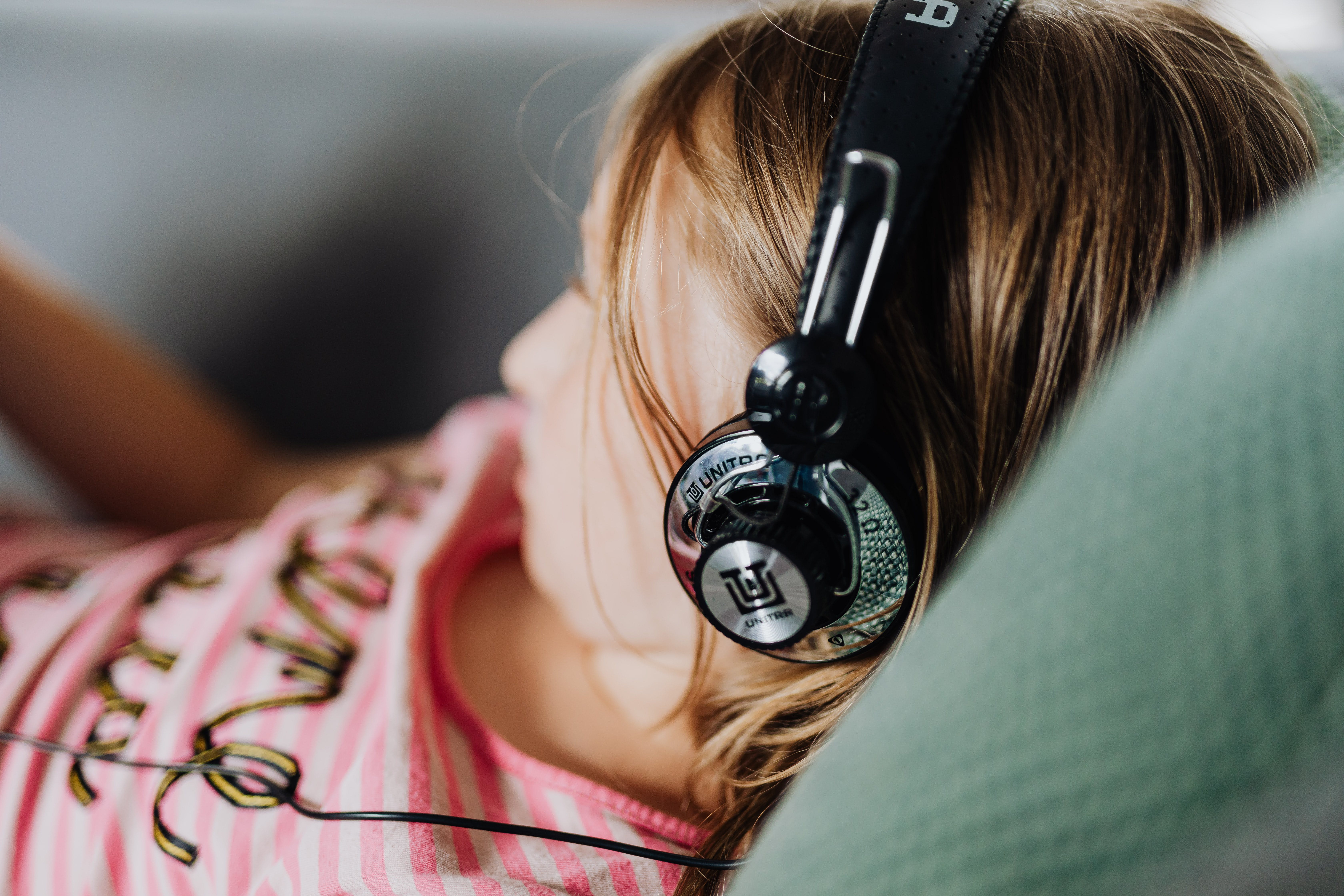
The NeuraSonic listening therapy exercises the muscles of the middle ear by using music electronically modified to retrain the ear, which helps these tiny muscles to work properly. This is done by playing music: mainly Mozart and Gregorian Chant which, when played, will cause the muscles to stretch to catch the higher frequencies, and then relax during the lower frequency sounds. These muscles are therefore getting a “work-out”. This retraining educates the ear to focus properly on specific sounds and to push into the background other extraneous sounds. This is the key to good listening – one must be able to both tune in and to filter out information, that is, to smoothly integrate sensory input.
The NeuraSonic® listening therapy also works on an emotional level. Emotional blockages can prevent people from listening. They can become stuck emotionally at a younger age, namely the age at which they suffered the original trauma, preventing normal emotional growth and also good listening. Take for example the situation of a person going to a lecture, feeling relaxed and happy and being able to listen carefully so as to absorb what is being said. However if that person were to have had a serious argument before attending the lecture, they would be very emotionally upset and find it too difficult to concentrate on the speaker because of their inner conflicts. People who are trapped in past emotional problems are preventing themselves from moving forward in their lives.
A NeuraSonic treatment might not necessarily take away these traumas but will provide new strategies based on a much more pacified and integrated nervous system.
At NeuraSonic, we have developed specific approaches depending on the type of trauma and symptoms shown on an emotional level.