
The secret world of the unborn child
How we develop specific psychological patterns while in the womb and how it affects the rest of our life
"The vagus nerve, which runs from the neck to the abdomen, is in charge of turning off the ‘fight or flight’ reflex.”
This might be so when you are mildly stressed, but it will certainly not be the case when your fight-flight mechanism is chronically activated, as in Post-Traumatic Stress (PTSD).
It is only when your fight-flight sympathetic nervous system starts to calm down that your parasympathetic nervous system—and thus your vagus nerve—can start to properly function again, thereby restoring balance.
Without addressing the often underlying emotional issues that keep your fight-flight autonomic system high, you will never be able to help regulate your parasympathetic nervous system, and thus your vagus nerve, to successfully come out of a freeze response.
It is the vagus nerve that connects to most of your organs, including the heart and lungs. When the parasympathetic nervous system and the vagus nerve come out of a hyperactivation—or freeze response—they can restore proper digestion and immune system functioning.
The vagus nerve exerts an influence commanding the entire emotional life of the organism. It is the tenth cranial pair, in conjunction (anastomosis) with the ninth pair or glosso-pharyngeal nerve, that sensitizes the middle ear, the internal wall of the tympanum and the pharynx. Then it joins the spinal nerve (XIth cranial pair) which innervates the muscles. It then sensitizes the larynx (through one of its collateral branches, the upper laryngeal nerve), taking care of its motor function through the recurrent nerve. Next it innervates the bronchia, and the heart at the coronary system level; finally it joins the opposing vagus nerve, plunging down through their common stem to the viscera, spleen, kidneys, pancreas, liver and gall bladder, innervating the digestive tube from the esophagus, stomach, small intestine and large intestine, all the way to the anus.
The importance of this nerve is obvious. It is the path of the “vagrant soul" and this is not a mere play on words. This nerve controls the entire field of potential somatisations. Vagal pathology encompasses a host of ills whose symptoms have considerable repercussions on the organism. For example: angina (from the Greek ankhone, strangling, an etymology that perfectly expresses the essence of its meaning); various anxiety states accompanied by the feeling of a lump rising in the throat; voice loss; gasping for breath; arrested respiration because of fear; palpitations that can be severe enough to be considered angina pectoris; anorexia; compulsive over-eating; biliousness; renal and digestive problems such as colitis and so on. Here we have the psychosomatic and somato-psychic keystone of a very subtle set of interreactions serving as a safety valve or initial dialogue and originating with the primary vagal stimulus occurring in the tympanum. This is why sound, the spoken word and the voice have such important repercussions on the internal response system.
There is one more point I would like to take up in some detail, and that concerns the recurrent nerve innervating motor laryngeal function. It is bilateral, like all nerves, and presents a right and a left recurrent.
But, whereas the two main vagus nerves, whose task is to innervate all of the larynx muscles except for the circothiroidian, appear to be symmetrical, their recurrent branches are not. The right recurrent nerve forms a branch off the upper cervical portion of the vagus stem and descends parallel with it to the edges of the sub-clavicle artery, meeting it as it enters the thorax; from there it seems to double back - and this is where the name "recurrent' comes from - and ascends once again towards the larynx. The left recurrent nerve forms a branch off the upper cervical region of the vagal stem on the left, at the same point as the right does, and descends parallel with the vagal stem until it reaches the arch of aorta; from there it "recurs" towards the left larynx.
It is easy to see that this is much longer. To me, this is a fact of great importance because, personally, I believe it accounts in large part for the right-left asymmetry characteristic of the human body. We are all well aware, of course, that this asymmetry plays a crucial role in the balance of speaking beings.
We have seen how the sound unit stimulus sets off numerous neurosensory resonances even before it reaches the acoustic nerve locked in its high tower, waiting to digest what has already been grasped at, taken in, sorted and guided into the labyrinth by other components of the body. But despite the immense progress made in auditory physiology during the last twenty years, there are still many mysteries to be solved concerning this process.
Pregnancy, womb, foetus and ombilical cord
Fifty million years or so ago a radical development in the methods of animal reproduction took place. Up to this time, the best method had been the laying of a hard-shelled egg which could be hatched by the warmth of the mother's body and fed from the newly-evolved mammary glands. But so great was the pressure of the predatory reptiles, that a method was evolved whereby a mother could retain her eggs inside her body, and 'hatch' them there and 'rear' the young inside her. A bag of flesh was evolved to meet the need. In this bag the egg could be 'hatched' and the young retained. But the evolution of this bag demanded the ancillary evolution of a placenta, an organ which could permit the blood of the young to 'feed' off the mother's blood, and to 'excrete' into its cleansing flow. This in turn required the provision of a free link between the placenta and the occupant of the womb, a requirement which was met by the evolution of a set of tubes called by us the umbilical cord.
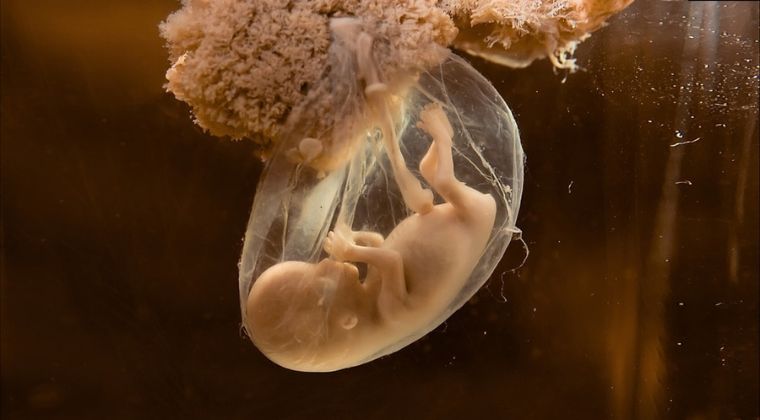
This reproductive mechanism, after serving its physiological function for millions of years, became involved in matters which quite transcended its original purposes. Presumably because it proved to have a configurational similarity with the creative pattern of the universe, this reproductive mechanism found a 'resonance with the primary architectonics of the cosmos.
Because the fetal body in its 'bag' imitated the focal nature of the creative nuclear element of the cosmos, this became 'imprinted' in the fetal organism. And because the relation of the fetal body to the womb and placenta through the umbilical cord, imitated the universal pattern of relations between nucleus and periphery, the whole uterine experience became invested with deep and unexpected intimations of the nature of the cosmos.
The primary sense thus evoked seems to be that of a constant cyclical reversal between the sense of being nuclear and the sense of being peripheral. The fetus, having acquired the sense of being solid and nuclear, felt that the umbilical arterial flow of blood away from his body was a means of demonstrating his nuclear power to thrust out and to pierce and occupy the placenta. Yet at the same time he felt that this arterial outthrust carried away his nuclear virtue and achieved its dissipation in the placenta.
The return flow of blood from the placenta seemed, on the contrary, to restore the energy of the fetus, and yet at the same time to 'hollow out' the fetus and to make it feel non-nuclear, which is to say, peripheral. Thus there was set up an oscillation of feeling which swung from a sense of being nuclear to a sense of being peripheral and back again. This experience seems in some way to match the basic process of the cosmos itself, which shows signs on every hand of a tension between nuclear and peripheral forces (contractive and expansive oppositions), the evidence of which is to be found on every level of creation.
The relation between the nuclear and peripheral forces is always shown in dreams and myths in terms of two streams of energy moving helically around a single stream. It is not possible yet to say whether this is imposed upon the cosmic impress by the umbilical instrument, or whether it is inherent in the cosmic flow itself.
In addition to this configurational element, superadded to the ordinary physiological functions, the fetus also seemed to gain a new mechanism of heredity, namely from something in his mother's blood which came to him through the placenta. This communication does not appear to be merely chemical, as would be the case with a hormone transmission, since it carries with it distinct mental elements. It is possibly initiated by the nervous connections in the walls of the umbilical arteries and veins which are very well present around the navel and up to 1 foot into the umbilical cord. That would explain the deep sense of pulsation (through the arteries) and delayed pulsation (through the veins) that NeuraSonic is reawakening.
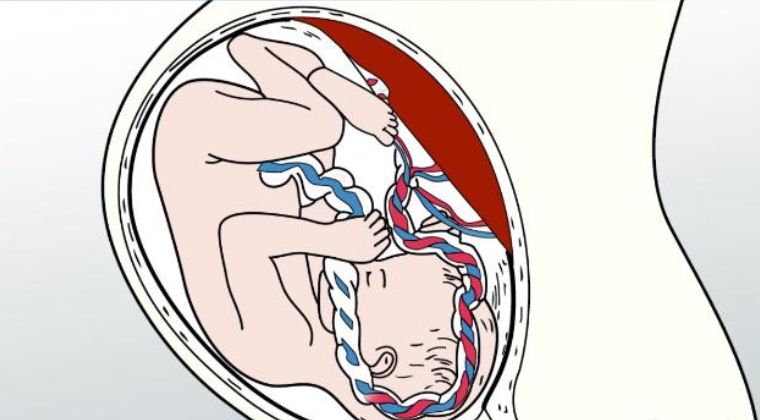
The primal feelings generated in the fetus by the umbilical arterial flow may be summed up as follows:
1. This is sensed as the primary act of excretion, and so becomes the root for all later experiences of excretion.
2. It is felt also as a dual aggressive thrust from and by a nucleus into a hollow.
3. But at the same time the fetal virtue itself feels to be drawn away into the placenta and there dissipated.
4. From which arises the strange sense that it is the fetus itself which travels forth, enters the placenta and is there destroyed.
5. From this 'journey' the fetus gains the primary sense of orientation, and of the structure of space-time.
6. The umbilical arterial flow is always associated in the feelings with the sense of two thrusts and their helical twist.
The primal feelings generated in the fetus by the umbilical venous flow may be summed up as follows:
1. This is sensed as the primary act of ingestion, and so becomes the root of all later experiences of eating and drinking.
2. This is sensed as an aggressive thrust from the placenta, as if it were constantly piercing the fetal body. Allied to this is the sense that the placenta, having been hollow and receptive, has suddenly become nuclear and aggressive.
3. The fetal virtue feels nevertheless to be restored through the life-giving activity of the placenta in the act of this venous thrust.
4. The fetus, having felt to go forth into the placenta and to be destroyed therein, now feels to be renewed and restored from the same source.
5. In this return journey, as it were, the fetus supplements its sense of the pattern of space-time and, in the total cycle of back-and-forth, gains a resonance with the cosmic process.
6. The umbilical venous flow is always associated with a single straight thrust.
As a result of this activity, the placenta is sensed by the fetus to be playing the following highly ambivalent roles:
1. It is a receptacle for excretion.
2. It is the instrument of food.
3. It is a hollow and helpless creature which can be pierced and occupied.
4. It is a solid and aggressive creature which can pierce the fetal body and occupy it.
5. It is a blood-sucker and a destroyer of nuclear virtue.
6. It is a life-giver and a restorer.
7. It is the 'wide world' into which the fetus may 'travel' and from which it may return again'.
8. It is a mysterious 'teacher', which transmits to the fetus organic or quasi-organic hereditary factors.
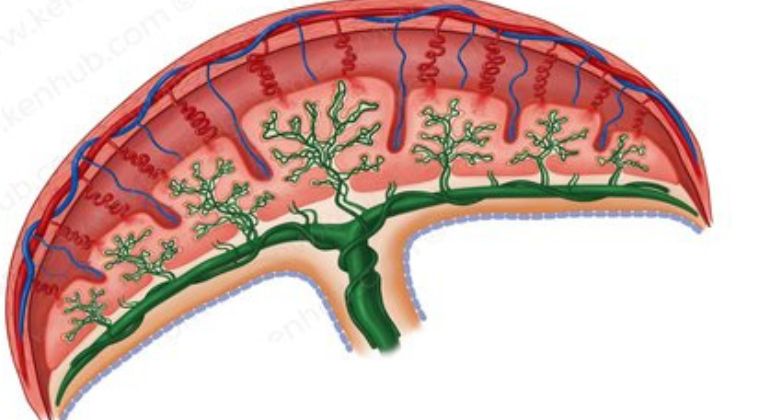
From these ambivalent feelings eventually arise a number of primary complexes, in the course of which the most conflicting and rationally impossible and even disgusting associations potentially derive. All these associations are made entirely without the intervention of the logical mind. They are associations made in much the same way that a pun is made. In fact, the Unconscious is a great maker of puns. This process goes on in the depths of the most illustrious minds, though it is strictly the mental process of infants and savages.
Typical such complexes are
1. The sense that one feeds from the place of excretion.
2. The feeling that one feeds from the place of death.
3. The sense that excretion and death are the same.
4. A feeling that one's own self is excretion.
5. The feeling that to feed is to 'eat oneself', since the umbilical vein is not only the feeding tube, but also the tube through which the fetal wanderer' returns to himself.
While it is generating these all-too-human elements of primary feeling, the cyclic flow of blood in the umbilical cord is also acquainting the fetal organism with the structure of space-time, so that it may be said that the flow of blood through the navel and along the umbilical cord, recapitulates the essential configuration of the cosmos. By this is not meant that the fetus senses the movements of the contemporary physical universe (though this also may be true), but rather that the fetus senses the original pattern from which the physical universe was derived). The fetus feels to be a nuclear point which throws out a line, achieves a plane, and then experiences the reversal of this geometrical development in the back flow of the blood from the placenta. In this 'vascular geometry' the fetus gains much more than a static sense of the structure of space-time. The fetus senses that he has lived through the experience of the unfoldment of the cosmos from the time-point to the space-sphere, through the line and the plane. The fetus gains a concrete sense of the manner in which creation is always done, namely by the setting of a point into a sphere. He senses this, moreover, not in terms of something once-done, but in terms of a persistent interrelation between point and sphere, in the course of which a rhythm is set up, a rhythm that runs from point to line, from line to plane, from plane to solid and to the point again. This the fetus feels in terms of a sevenfold complex, for reasons which I have explained.? The fetus in this way gains a specific insight into the creative pattern and method. Thus the umbilical cord is the instrument which evokes not only extremely personal and earthy feelings, but also the most elevated and cosmic ones. This coincidence of the 'earthy and the sublime is a marked feature of the human self.
Subjectively, all this fetal impress takes on a highly personal and poetic color. The fetal skin feeling is represented in dreams as a majestic cloak or garment of light, color and nuclear pride, a representation which the myths also make, most naturally since they are but a collectivized version of the individual feelings. The fetus or, at any rate, the nuclear feeling reposed in him by the cosmos, is felt as the Shining One, King of the universe, who occupies the focal position in all things.
Yet this majesty has a seed of tragedy: this Great One has an Achilles Heel. For his virtue is being constantly drained from him and destroyed. Moreover, the instrument of this destruction is also an aggressive enemy who constantly pierces the Great One and hollows him out. The instrument of this inquietude is a mysterious Twin, whose nature is tantalizingly ambivalent.
There is another complication in the life of this Lordly One, who symbolizes the subjective sense of our own fetal existence. He feels himself to be a monarch sitting upon a throne and dominating his periphery, but he is also a wanderer doomed forever to go forth and to return again. He is humbled and brought low; he is destroyed; but he is restored again to new life and to his central place.
One might recognize in this sketch of the subjective sense of the fetal life the lineaments of the mysterious saviors and gods who have in the past received the adulation and hope of the world's millions.
This is no mere sacrosanct fiction. It is an answer to the longing of the human heart, which is to find somewhere on earth, or in heaven, the glorious one they once knew before birth, and whom they mysteriously somehow lost. This feeling is ever with us, no matter how battened down it may have become by the rational mind.
For this strange medley of primary feelings though it is cut off by birth, is not lost. It is separated by birth from the familiar organs and processes which first evoked it and then maintained it, but it is not destroyed.
The uterine pattern lives on in the body after the disruption of the organism that evoked it. This it does by selecting certain postnatal organs, which it induces to feel as though they were the lost prenatal structures.
I do not pretend to be in possession of all the details of this great changeover, but I know a great deal of the way in which the prenatal pattern bridges the chasm of birth and attaches itself to other organs and processes.
Most of the text and ideas by Francis J. Mott (1959), in 'The nature of the self', pp 79-84.
My experience suggests that these improperly, imperfectly and insufficiently done configurational translations are the cause of a great deal of human sickness; physical, emotional and mental.
The pattern of feeling evoked in the umbilical cord survives the experience of birth. What I have learned about the fetal feelings is obviously not learned direct from the uterine state, but from the products of that state carried over into the postnatal body.
This carry-over is achieved in a most surprisingly simple manner, or so it appears to me. Indeed, the methods are so naive that they will inevitably be suspect on that account alone. I myself, as each new discovery of these methods began to dawn upon me through my analyses, was often tempted to feel that nothing could be quite so naive as the hypothesis I found myself impelled to formulate.
The method of carry-over of the prenatal feelings into the postnatal state amounts to this: the feelings select three organs or parts of the body which can play the roles of fetus, placenta and umbilical cord. They then invest these ordinary bodily organs with their own peculiar configurational elements. For instance, at birth, as I shall show in detail, the newborn head swiftly becomes enlisted to play the role of fetus; the lungs are impressed into the task of representing the placenta, while the windpipe and its two-way flow of air assume the representation of the umbilical cord and its two-way flow of blood.?
Let me make it very clear that to the newborn child this superimposition of new values upon orthodox anatomy assumes the most concrete form. The newborn infant has no truck with analogies or anything of an abstract character. To him it is not true that his head feels to be the fetus. What is true is that his head is the fetal self. The lungs are not felt as if they were the placenta. The identification is complete: the lungs are the placenta.
The same is true of the postnatal identity between windpipe and cord, air and blood. The breath is not merely felt 'as if it were the umbilical blood. To the neonate the breath is the umbilical blood. This simple fact must be kept in mind, or the reader will not be in a position to appreciate what follows.
As to the basis upon which these organs are selected to play their configurational role, I can say no more than that it appears to be one of pure feeling-association. Taking the above instance as my example, I suppose that the newborn head feels to be the fetus because whereas before birth the whole skin was the source of 'touch', this sense now becomes concentrated at the special organs of the head. In the same way I suppose that the neonate feels his lungs to be the placenta because the effect of oxygenation derived from both these organs is similar. Given this situation, how inevitable that the flow of air between head-as-fetus and lungs-as-placenta should be felt as the two-way flow of umbilical blood! It is a relatively simple process of feeling-association, and it bears no more relation to the formal anatomy and physiology of the body than a brilliant pun bears to the body of formal logic.
Yet this irrational nature of the method of 'feeling migration' must not mislead us into supposing that it is without a logic of its own. Indeed, that logic is the structure of our very minds, and without it there could be no mind. Moreover, it is a strict logic, and it demands satisfaction in the body in the shape of strictly formal accommodations. It demands this satisfaction in a specific and orderly manner—in a logical sequence that is fulfilled by the migration of these feelings to new and yet newer sets of organs until at last they reach the brain.
Not just any three organs or bodily parts selected at random can fulfil the demands of this configurational process. At birth, for instance, certain organs or bodily parts always play the same roles.
The configurational anatomy of the body is just as rigid as its gross physical anatomy. The same organs always play the same roles in each one of us. Unless this were so, there could be no such things as the myths, for the myths confirm what dreams suggest, namely that the configurational anatomy of the human being is consistent.
Moreover, the very age of the myths shows us that this consistency is not of recent date, but that it stems back into the far past.
And where myth abandons us, primitive rites and beliefs carry us still further backward into the mists of human origins, suggesting that indeed this configurational consistency of bodily parts and functions is the nature of man as mind.
The organs which take up the uterine pattern at birth do not normally retain it, or more than a lingering hint of it, but they pass it on to another set. This set, in turn, passes the 'torch' on to yet another set of organs until at length the brain takes up the major role and weaves the entity we call "I'. There is, so to say, a migration of these polar feelings through the body from birth until about seven years of age. It is the story of this migration which forms the subject matter of the following chapters.
Wherever this configurational polarity awakens in the body, there inevitably appears the original pattern of the womb.1 There is always found to be an organ that is playing the fetal role, another the placental role, and yet another organ or process that is playing the role of the umbilical link between them. Moreover, what I said earlier of the head, the lungs and the windpipe remains true, namely that the organs invested with this configurational pattern actually feel to be the fetus, the placenta and the cord. The identity is never abstract, always concrete and absolute.? Part Two will give an outline of the way in which birth effects the transfer of feeling from the prenatal to the postnatal state, and will in addition give an outline of how the uterine feeling moves or migrates through the body until at last it reaches the brain. The reader may suppose that this persistence of the old uterine feelings is merely a nuisance, to be brought to an end at the earliest possible moment. On the contrary, it seems impossible to avoid the conclusion that the loss of these uterine feelings means almost literally the loss of the soul. Yet at the same time it is true that if we retain the old feelings unchanged in form, we become emotionally deranged, as in the case of the mother-tied adult. The proper course seems to be to retain these feelings and to strengthen them, but at the same time to transform them. The extreme of losing them seems to be almost as bad as the extreme of retaining them unchanged in form. Both extremes are dangerous. What we need to do is to retain but to transform the uterine sense of cosmic pattern. We have to keep the pattern but to lose the influence of the organs of the womb. This need to retain the uterine feelings is probably the influence lurking behind the superstitious awe with which many primitive people (and some of our own peasant ancestors) regarded the placenta and the umbilical cord. These were (and still are) preserved or disposed of with great respect, since they were believed to exert a powerful influence over the child's future. I presume that this care of the actual physical relics of birth was the outcome of a failure to distinguish between the discarded organs and the configurational elements of which they had formerly been the instruments.
A. NEWBORN HEAD IS FELT AS NUCLEAR FETAL SELF
B. TRUNK IS FELT AS MOTHER WITH FETAL SELF (AS HEAD) INSIDE STOMACH AS WOMB
C. HEAD IS FELT AS REBORN SELF AT LOWER END OF TRUNK. AND IS CONFUSED WITH FECES
D. HEAD IS NOW FELT AS BORN UPWARDS OUT OF TRUNK• WHERE IT IS NOW ALSO FELT AS A HOLLOWED-OUT PIECE OF FECES
This should be regarded as a schematic outline of some of the most revered myths and of the most familiar and beloved fairy tales.
I will mention here in outline one of these representations, taken from the Grimm collection. It is the famous tale of the Princess and the Frog, which I will briefly outline. A princess is wont to play with a golden ball by a well. One day she drops the ball in the well, and as she is lamenting bitterly, an ugly frog peers over the well-top and offers to restore it to her if she will promise to let him eat from her golden plate, drink out of her goblet and sleep in her bed. The princess promises this, and the frog retrieves her ball. The princess forgets her promise, but the frog turns up at the palace and demands to eat from her plate, drink from her goblet, and to sleep in her bed. The princess shudderingly permits the first and the second, but when the loathsome creature appears in her bedroom and demands to be lifted up, she throws him hard against the wall, but when he falls down from the wall, he is a handsome prince. He had been bewitched. The couple are married, and as they drive away, they hear three strange noises, one after the other. It is the three iron bands bursting from around the heart of the prince's servant—iron bands which he put there when his master was bewitched.
All I can say for certain is that this events do occur in the bodies of every man and woman. That there are variations goes without saying. Some things are done that ought not to be done, and some things are improperly, imperfectly or insufficiently done. My experience suggests that these improperly, imperfectly and insufficiently done things are the cause of a great deal of human sickness; physical, emotional and mental.
Inspired and copied from Francis J Mott (1959). The nature of the self. Pp 87-94.